
PeakSonic M2 Bladder Scanner
Advanced 3D Bladder Scanner for Greater Clinical Confidence
Advanced 3D bladder scanning with ±7% accuracy, designed to support greater clinical confidence in bladder volume and post-void residual (PVR) assessment across care homes, community healthcare and hospital settings.
From £4,970 + VAT.
(Scanner-only and Clinical Adoption packages available, with optional accessories)
CE/UKCA Marked · 24-Month Warranty · UK Support · Finance Options Available, Subject to Status.
Need help choosing? Compare our bladder scanners →
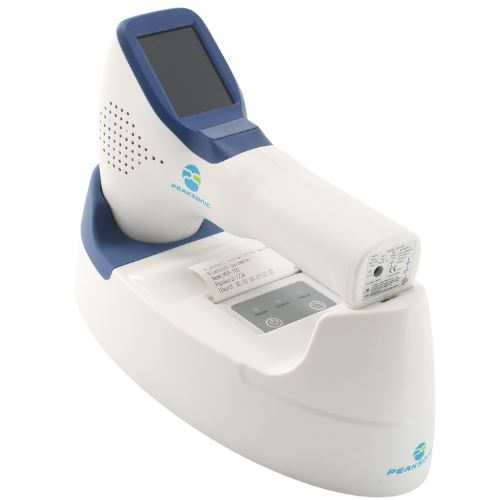
Accurate and Portable Bladder Scanning
Purpose-built with innovation and usability at its core, the PeakSonic M2 Bladder Scanners set a new standard for reliability, precision, and ease of use in urological assessments.
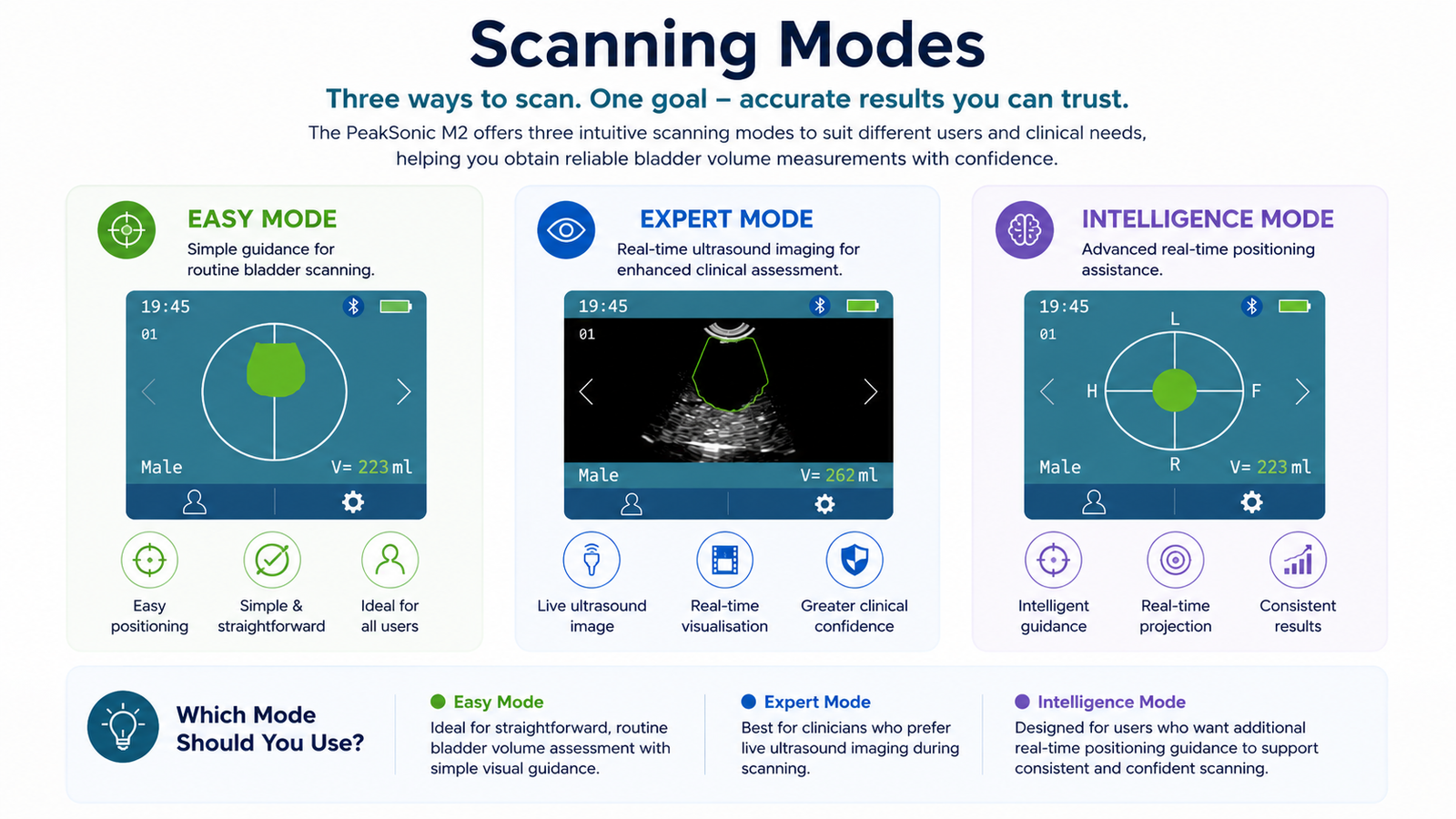
A key advantage is Intelligent Mode - an exclusive pre-scan function that helps clinicians locate the bladder with greater precision before measurement.
With this capability, the M2 Bladder Scanners deliver industry-leading accuracy of ±7%, significantly outperforming the ±14% benchmark commonly seen across comparable devices.
Why Choose the Peaksonic M2?
The PeakSonic M2 combines advanced 3D ultrasound technology with an intelligent touchscreen workflow to deliver fast, non-invasive bladder volume assessment with ±7% accuracy. Accurate, intuitive and designed for everyday clinical use, it provides greater clinical confidence for urinary retention and post-void residual (PVR) assessment, making it an ideal choice for care homes, clinics, community healthcare teams and other healthcare environments requiring enhanced bladder scanning performance.
Advanced 3D Bladder Scanning
Advanced 3D ultrasound technology automatically measures bladder volume with ±7% accuracy, providing greater confidence than conventional 2D bladder scanning.
Greater Clinical Accuracy
With ±7% measurement accuracy, the M2 supports reliable bladder volume and post-void residual (PVR) assessment, helping clinicians make more informed bladder management decisions.
Intelligent Touchscreen Operation
An intuitive touchscreen interface with Easy, Expert and Intelligence modes makes the scanner straightforward to operate while supporting users with different levels of experience and clinical requirements.
Portable & Handheld
A lightweight handheld design allows the M2 to be easily moved between patients and clinical areas, making it ideal for care homes, clinics, community healthcare and other point-of-care settings.
Fast, Non-Invasive Assessment
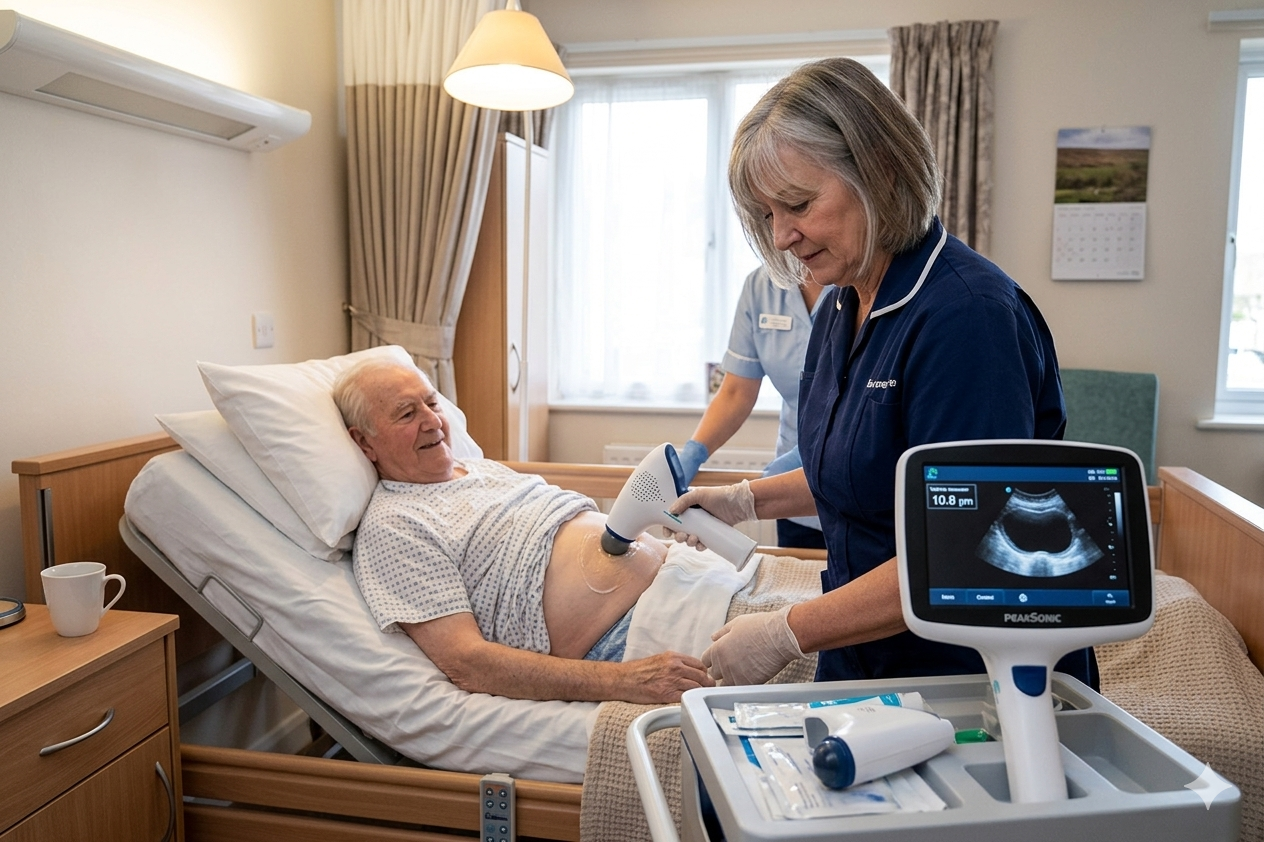
Assess bladder volume quickly without catheterisation, helping improve patient comfort while supporting efficient clinical assessment and workflow.
Practical Data & Printing Options
Built-in data storage, USB-to-PC data transfer and Bluetooth printing capability make it easy to record, manage and share bladder scan information as part of routine clinical practice.
Who Is It For?
The PeakSonic M2 are designed for healthcare professionals who need fast, non-invasive bladder volume and post-void residual (PVR) assessment at the point of care. Manufacturer materials position it for hospitals, emergency care, obstetrics, gynecology, radiotherapy, nursing homes, rehabilitation centres, and elderly care settings.

Models/Features of PeakSonic M2 Bladder Scanners
M2 Model
M2-W Models
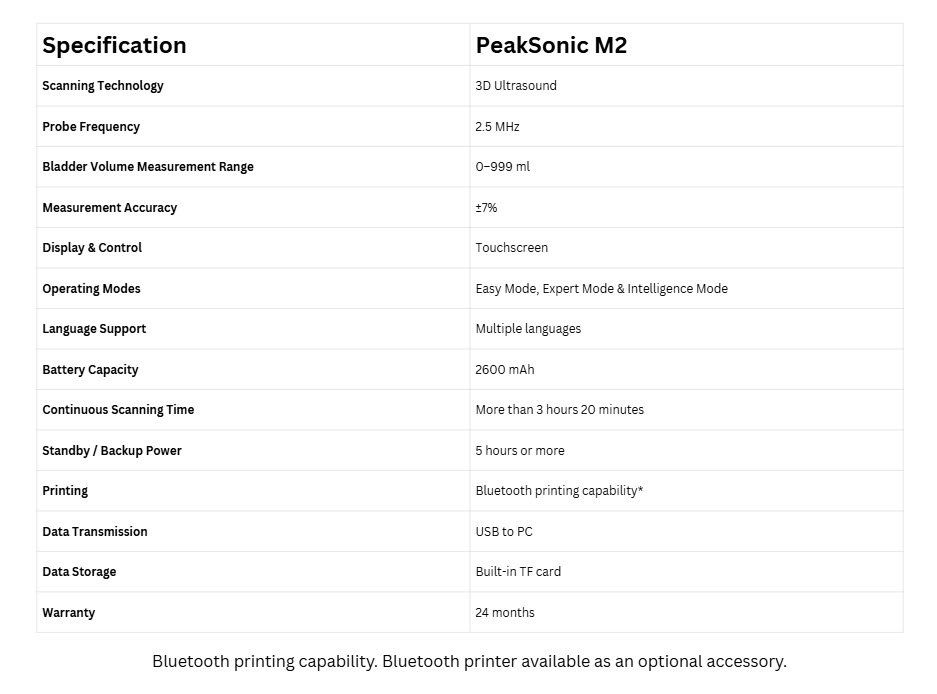
PeakSonic M2 Specifications
3D Ultrasound | ±7% Accuracy | 0–999 ml Measurement Range | Touchscreen Interface | Easy, Expert & Intelligence Modes | 24-Month Warranty
More Than the Scanner
More Than Equipment Supply
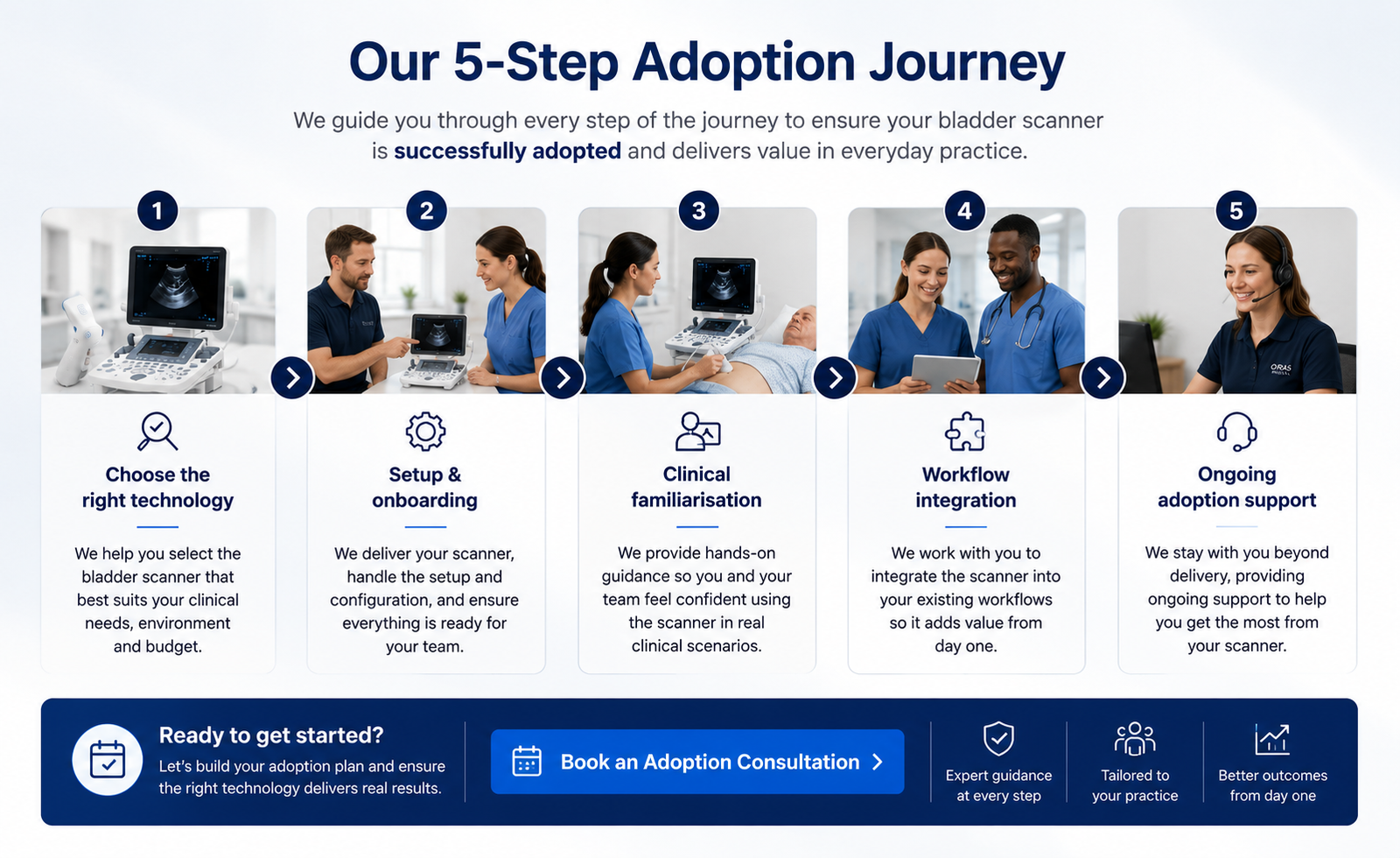
We don’t simply supply portable diagnostic devices - we help healthcare professionals successfully adopt them into everyday practice.
WHAT COMES WITH YOUR PURCHASE
Peace of mind with comprehensive cover for your investment.
Fast and secure delivery to your practice or facility.
We help you get started with confidence, right from day one.
Stay up to date with the latest features and enhancements.
Responsive UK-based support when you need it.
Tailored support to help you integrate the scanner into your workflow. (Depending on package)
We advise on the right training pathways to build your skills.
Access practical guides, webinars and resources to support your learning.
Our goal is your success: We combine quality devices with support, education and guidance so you can deliver better care and build confidence with every scan.
Confidence Comes From Competency
Scanners are only valuable when teams can use them properly - that’s why adoption is built into our model.
Flexible Finance Options Available
Spread the investment cost of your diagnostic equipment with flexible business finance options available for eligible organisations.
Flexible finance options may be available for equipment, onboarding, training, and implementation support, subject to status and approval.
Compare Bladder Scanners
Features | M1 Scanner | M2 Scanner | M4 | M5 |
|---|---|---|---|---|
Scan Type | 2D | 3D | 3D | 3D |
Accuracy | ±14% | ±7% | ±7% | ±7% |
Format | Portable | Portable | Handheld | Console |
Best suited to | Individual use | Clinical use | Mobile use | High-volume use |
Handheld | YES | YES | YES | NO (Cart-based) |
Tablet / Phone Based | NO | NO | YES | NO |
Integrated Console | NO | NO | NO | YES |
Bladder Wall Thickness | NO | NO | NO | YES |
Printer Support | Optional | Optional | Bluetooth | Built-in |
Ideal Setting | Care Homes & Clinics | Care Homes & Clinics | Mobile & Hospitals | Advanced Clinical Use |
Warranty | 24 months | 24 months | 24 months | 24 months |
Price | From £3,995 + VAT | From £4,970 + VAT | From £5,570 + VAT | From £7,880 + VAT |
View Scanners |
Not sure which model is right for you?
Our team can help you compare the options based on your clinical setting, intended use and requirements.
Bladder Scanning Modes and Operation
Key Differences of M1 & M2 Bladder Scanners
Features | M1 Scanner | M2 Scanner |
|---|---|---|
Intelligent Mode | NO | YES |
Scan Technology | 2D | 3D |
Accuracy Rate | ±14% | ±7% |
Pre-Scan Bladder Location Assistance | NO | YES |
Ease of Use | Simple operation | Enhanced Ai guidance for improved positioning |
Clinical Confidence | Suitable for routine assessments | Greater confidence in challenging cases |
Ideal Users | Home users, caregivers, budget-conscious facilities, routine bladder assessments | Hospitals, care homes, community healthcare, GP practices, continence services |
M2 vs Traditional Bladder Scanners
Features | M2 Scanner | Traditional Catheterization |
|---|---|---|
Non-Invasive | YES | NO |
Scan Time | Under 5 seconds | 10–15 minutes |
CAUTI Risk | NONE | HIGH |
Portability | Handheld | Not Applicable |
Data Management | 10,000+ cases | MANUAL |
Accuracy Rate | ±7% | ±14% |
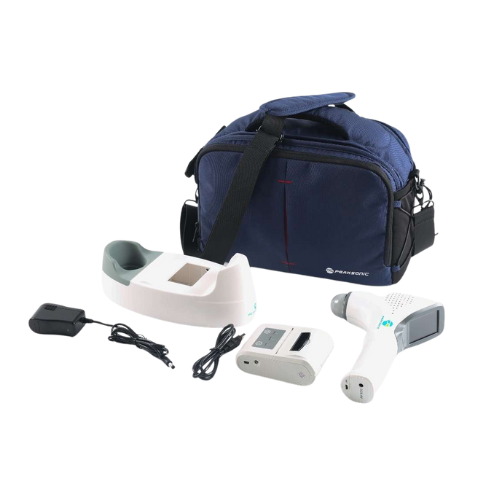
Comes with a Dedicated Portable Carry Bag
The PeakSonic M1 & M2 are supplied with a dedicated portable carry bag, providing safe storage and easy transport between rooms, wards, or community settings while helping protect the device during everyday clinical use.

Bladder Scanner FAQs and Clinical Guidance
Are the Scanners NHS-compliant?
What training and support are included?
What clinical applications are they designed for?
What warranty is included?
How does the image quality compare to larger systems?
Does it suit our clinical use case?
Can these be financed or bundled?
Does it store and manage patient images?
Why should we buy from you rather than a general supplier?
How easy is it to use day to day?
ABOUT US
Oras Medical is a specialist clinical adoption provider helping professionals, clinics, hospitals, GPs and care teams implement portable medical ultrasound solutions across the UK.
Oras Medical is a trading name of Oras Marketing Limited, Registered in England & Wales with registration number 12935403. VAT No. GB498618427. Registered address: Eastlands Court Business Centre, St. Peters Road, Rugby, Warwickshire, CV21 3QP. Email: admin@orasmedical.com, Phone: +44 (0) 1788 270 191.
SOLUTIONS
PRODUCTS
USEFUL INFO
PAYMENT INFO

Copyright 2026 Oras Medical - Privacy policy | Terms & Conditions | Disclaimer